
Nearly five months after its soft launch, the government's e-portal, the National Single Window System (NSWS), is seeing a significant increase in the number of investors using it to get a bunch of approvals for their ventures. The first clearance was granted on 18 January. Since then, the progress has been good. Out of the 1,258 registered users on the portal, 378 were registered in the last one week.

While the infection has been mild in most reported cases, those below two years of age are showing signs of acute infection.

India has agreed to allow import of pork and pork products from the US as a part of a bilateral trade deal which will facilitate export of Indian mangoes and pomegranate to the US. The development comes months after the two governments renewed the India US Trade Policy Forum (TPF), after which both nations agreed to iron out thorny issues that included market access issues pertaining to the agriculture sector.

Adar Poonawalla says it took a five-minute chat with his father Cyrus before making the decision to manufacture Covishield. The bet paid off, and handsomely. Serum Institute now has the capacity to make 4 billion doses of Covishield annually.

The Department for Promotion of Industry and Internal Trade (DPIIT) will soon start public consultation for a national retail trade policy, which is likely to include an insurance scheme aimed at providing financial protection against losses caused by theft, accidents or natural calamities. The policy will also spell out ways to give traders access to low-cost finance, promote digital inclusion, and create necessary infrastructure to support them, a senior government official told Business Standard. This is expected to offer relief especially to traditional traders, who are facing stiff competition from large e-commerce players.
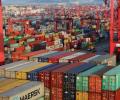
Uncertainty looms over India's export outlook, with the new Covid-19 variant Omicron spreading rapidly across the country's key shipment destinations. With the US and parts of Europe witnessing more than 100,000 Covid-19 cases a day, exporters expect some disruption. However, there may not be an immediate decline in exports from India because the order books remain strong at least for the next few weeks, they said.

The government is working towards further review and simplification of the foreign direct investment (FDI) policy to facilitate the proposed initial public offering (IPO) of the Life Insurance Corporation (LIC), Department for Promotion of Industry and Internal Trade (DPIIT) secretary Anurag Jain said on Thursday. The final decision will be taken by the Cabinet. The industry department is working together with the finance ministry's department of financial services (DFS) and department of investment and public asset management (DIPAM) towards a successful listing of the life insurer on the domestic bourses, which is expected to be the largest in India.
The company had in December said that the CDSCO had approved a 12-month shelf life for Covaxin, which was nine months earlier, Sohini Das reports.

A back of the envelope calculation shows that India has roughly over 680 million doses of Covid-19 vaccines consisting primarily of Covishield doses.
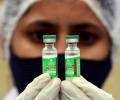
Serum Institute has the capacity to make 250 million doses of Covishield monthly.
Bharat Biotech is targeting to manufacture one billion doses of its intra-nasal vaccine in 2022 which is under clinical trials now.

'Antibodies remain in the blood for at least seven to nine months.'
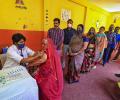
'Someone may have diabetes, but at what level the disease qualifies as a comorbid condition is something a doctor will decide upon and certify accordingly.'

If the vaccine is recommended for use as a booster against Omicron, it may significantly boost the demand for Covishield in India.

As the Omicron variant of Sars-CoV-2 takes centrestage, vaccine makers in India are of the view that scaling up the existing vaccines to make them more effective is possible.

The share of total health expenditure as part of the gross domestic product (GDP) went down to 3.3 per cent in 2017-18 from 3.8 per cent in the previous two years, according to the national health account data released on Monday by the health ministry. The share of government expenditure as part of total expenditure as well as GDP has gone up from from 3.78 per cent to 5.12 per cent between 2013-14 and 2017-18, which could also explain a decline seen in out of pocket expenditure in 2017-18. Health ministry also emphasised the increase in the government health expenditure as part of the total GDP from 1.15 per cent in 2013-14 to 1.35 per cent in 2017-18.

After ramping up production to meet the steep demand spike during the Covid-19 pandemic, Indian medical device makers are now struggling with idle capacity. According to industry estimates, around a third of the installed capacity, especially for consumables, disposables, small-ticket electronic items, etc., is lying unutilised. Sample this: India used to produce just 6.24 million pieces of PPE kits per annum before the pandemic, but by June this was ramped up to 233.87 million pieces per annum.

'Antiviral treatment will have no change. Spike protein change may affect the immunity protection.'
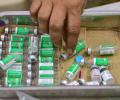
With around 2 million Covid vaccine doses likely to get wasted in December, leading hospital chains have now started to give it gratis to citizens. Sohini Das and Ruchika Chitravanshi report.
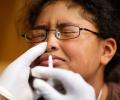
A nasal vaccine, one expert said, is a "fantastic idea" for two reasons -- one, it can potentially create sterile immunity, and two, it is easy to administer and thus scalable.
 © 2026 Rediff.com - Advertise with us - Disclaimer - Privacy Policy - Sitemap - Feedback - About us - Terms of use - Grievances